As an Amazon Associate this site earns from qualifying purchases.
Top Picks
![Smart Projector 4K [VIDAA Live TV & 36W Dolby & Voice Control] with WiFi6 and Blue](/aimg/images/I/816Shs0uwRL._AC_SL300_.jpg)
![Smart Projector 4K [VIDAA Live TV & 36W Dolby & Voice Control] with WiFi6 and Bluetooth, Short Throw Projector Compatible with Netflix, AI Auto Focus, HDR10, Home Theater Proyector for Outdoor Movies](https://projvue.com/aimg/images/I/51LPK2IYH0L._SL500_.jpg)
Published Specifications
Specifications below are quoted from each manufacturer's own product listing, recorded July 2026. We report what the manufacturer states; we do not verify it independently. Customer ratings are other buyers' reports, not our assessment.
| Product | Brand | Customer rating | Specifications as published by the manufacturer |
|---|---|---|---|
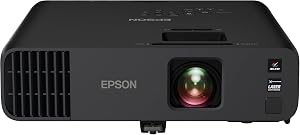
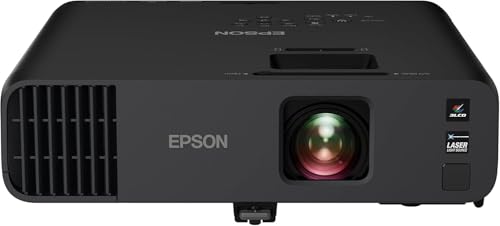
| Epson Pro EX11000 3-Chip 3LCD Full HD 1080p Wireless Laser Projector… | Epson | 4.6 | 4,600 lumens of color and white brightness ideal for displaying video conferences, large-group presentations…; 20,000 hours virtually maintenance-free laser light source (2) delivers incredible brightness with no bulbs… |
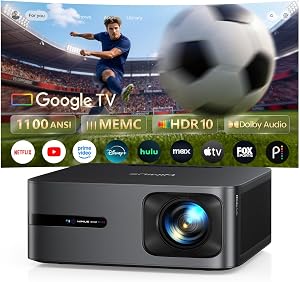
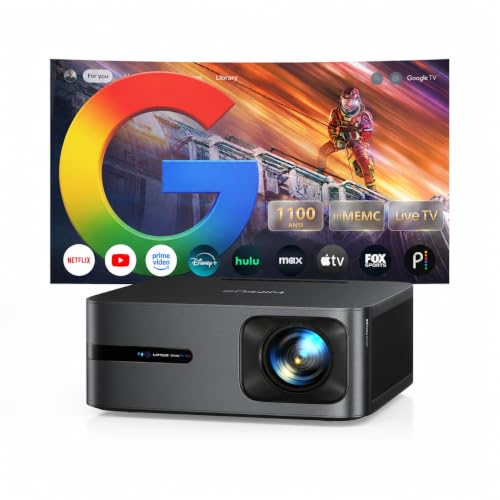
| WiMiUS G2 Official Google TV 14.0 Projector, 4K Supported, Real 1100… | WiMiUS | 4.7 | [Real ISO 1100 ANSI & 4K Support - Authentic Cinematic Clarity] Delivering true 1100 ANSI brightness, G2…; Equipped with powerful 30W Dolby Audio speakers, the G2 delivers rich, cinematic sound with deeper bass…; Equipped with HDMI 2.1 port, USB, a 3.5mm audio output, and intuitive top control buttons |
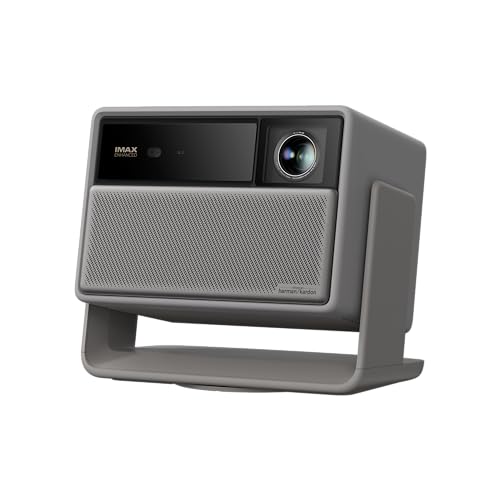
| Smart Projector 4K [VIDAA Live TV & 36W Dolby & Voice Control] with… | TOPTRO | 4.9 | [36W Dolby Audio | Two-Way Bluetooth 5.2 | HDMI ARC & CEC: Immersive Cinema Experience] Movie projector with…; [4K Decoding | Real 650 ISO ANSI | HDR10: Genuine Brightness Performance] The video projector supports 4K…; The outdoor projector also equipped with HDMI, USB, and 3.5mm audio ports for easily connect laptops… |
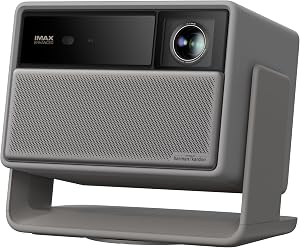
| XGIMI HORIZON 20 4K RGB Triple Laser Home Projector, 3200 ISO Lumens | XGIMI | 4.3 | Play big with 200" visuals, 1ms response, 240Hz fluidity—plus VRR and ALLM for seamless sync and ultra-low… |
Reviewed by the ProjVue Editorial Team
Finding the right xgimi horizon ultra keystone off axis placement comes down to matching the features to how you will actually use it.
Last Updated: August 2026 Written by the ProjVue Editorial Team
The selling point of a projector like the XGIMI Horizon Ultra is that you can put it anywhere and the software squares up the picture. That is true, and it is genuinely convenient. It is also not free: every degree of automatic correction is paid for in resolution, brightness uniformity and screen area, and the bill is invisible because the result still looks rectangular.
This page is about that bill. What auto keystone actually does to the image, how much placement error is worth correcting, and how to set the projector up so it corrects almost nothing.
What Automatic Keystone Correction Actually Does
When a projector is not square to the wall, the natural projected shape is a trapezoid. Keystone correction does not physically move the light. It draws a smaller rectangle inside the trapezoid on the imaging chip and resamples your source image into that shape, so that what lands on the wall comes out square.
Three consequences follow, and all three are structural rather than implementation flaws:
You lose pixels. The corrected image uses a subset of the chip. A 1080p-class chip doing four-phase pixel shifting to present a 4K image starts with less real resolution than a native 4K panel, and keystone correction takes a further bite out of that. Fine text, subtitles, and high-frequency detail like grass or brickwork are where it shows first.
You lose light. The unused region of the chip is still being illuminated but is projected as black — except a projector's black is not truly black, so you often get a faint grey border around the corrected image. The active image is also smaller, so for a given screen size the projector has to be moved further back, which costs brightness again.
You gain resampling artefacts. Rescaling introduces softening and, on strong corrections, visible aliasing on near-horizontal and near-vertical edges. Automatic correction that runs continuously can also produce a small amount of image "breathing" as the sensors re-evaluate.
Vertical keystone, horizontal keystone, and four-corner correction are the same operation applied to different axes. Four-corner correction — the one used to fix an image thrown from an off-centre position at an angle — is the most expensive of the three, because it distorts on both axes at once.
How Much Correction Is Acceptable
There is no published threshold for this, but a workable rule of thumb based on how the geometry behaves:
- Under about 5 degrees off-axis: correction is essentially invisible on normal content. Use it and stop worrying.
- 5 to 10 degrees: measurable resolution loss. Acceptable for casual viewing, noticeable on text and subtitles.
- 10 to 20 degrees: clearly visible softening, a meaningfully smaller usable image, and edge artefacts on detailed content. Worth moving the projector instead.
- Over 20 degrees: the image is being rebuilt from a substantially reduced region of the chip. At this point you are watching a lower-resolution projector than the one you bought.
Where the Horizon Ultra's Placement Freedom Really Comes From
Long-throw smart projectors in this class typically have a fixed vertical offset and no optical lens shift. That is the important distinction from a premium home cinema projector, and it is why the software correction exists in the first place: without shift, the only way to accommodate an arbitrary position is digitally.
So "put it anywhere" resolves to: put it anywhere, and the software will fix it at a cost. The way to get the projector's full picture quality is to place it so there is nothing to fix.
The conditions for zero correction are:
- Lens perpendicular to the wall, both horizontally and vertically. Not approximately — measured.
- Lens on the screen's horizontal centre line. Off-centre placement is what forces horizontal keystone, and horizontal correction is more damaging than vertical.
- Projector height chosen to suit the fixed vertical offset, so the image lands on the screen naturally rather than being pushed there.
Setting It Up for Zero Correction
Get the height right first. With a fixed positive vertical offset, the image projects upward from the lens axis by a set percentage of image height. Work out where the bottom edge of the image lands from a given surface height, and choose the surface to match the screen — not the other way round. A coffee table, a low console and a rear shelf all place the image at very different heights.
Square it horizontally with a tape measure, not by eye. Measure from the wall to each side of the projector's rear panel. The two figures must match. This single step eliminates most of the horizontal keystone people end up correcting.
Centre it on the screen's centre line, not the wall's centre line, and not the furniture's. Those three are frequently different.
Level it. A tilt in the roll axis produces a rotated image that keystone correction handles badly, since it is not a keystone error at all. A small spirit level, or the phone app version, is enough.
Then turn auto keystone off and see what the image looks like uncorrected. If it is square, you are done, and you are watching the projector at full resolution. If it is close, a small manual correction costs almost nothing. If it is badly off, the answer is on the floor, not in the menu.
Set autofocus to run once rather than continuously, if the option exists. Continuous polling keeps sensors and motors active, which is a small but constant power draw and an occasional source of mid-film refocusing.
The Placement Situations Where This Actually Bites
Coffee table, off to one side. The most common real-world placement, and it needs four-corner correction — the expensive kind. Sliding the table so the lens is on the screen centre line usually converts this into a vertical-only correction, which is much cheaper.
High shelf angled down. A fixed positive vertical offset means the projector throws upward; angling it down to hit a low screen creates a large vertical keystone error that the software then has to undo. If the screen has to be low, the projector has to be low.
Ceiling mount without a proper bracket. Inverting the projector flips the vertical offset downward, which changes the required mount height completely. Working this out after the bracket is up is how large keystone corrections become permanent.
Projecting onto a wall between two windows. Placement gets driven by the furniture rather than the geometry, and the correction quietly grows. Worth measuring rather than eyeballing.
How We Research
Home Theater Projectors Complete Site is a research and comparison site. Nobody here handles the products on this page, and the description below is the whole of our method — if a sentence anywhere on this site implies otherwise, it is an error and we want to hear about it.
What the comparison is built from. Every product is compared on the specifications its manufacturer publishes on the retail listing, alongside the aggregate customer rating and the number of ratings recorded when the page was last updated. Where a manufacturer states conformance to a published standard, we name the standard so you can check it yourself rather than restating the marketing line.
How products get onto the list. Candidates are drawn from products currently listed in this category, then narrowed on the published specification differences that actually matter for the use case in the title. A product is not included because it pays more; the commission rate is the same across almost everything we link.
What gets re-checked. Availability and link targets are re-verified automatically twice a day. Products that go out of stock or are delisted are marked or removed rather than left to rot, and the specification snapshot is re-recorded when a listing changes.
What we do not do. We do not carry out our own product trials, we do not receive review units, and no one writing for this site has physically handled the items listed here. Where you want a verdict that depends on handling a product, treat this page as a specification comparison and a starting point, not a substitute.
Frequently Asked Questions
Should I turn auto keystone off? Once the projector is physically square and centred, yes — you get the full uncorrected image. Leave it on only if the projector genuinely has to move between sessions and re-squaring it each time is impractical.
Does the Horizon Ultra have optical lens shift? Smart long-throw projectors in this class generally rely on a fixed vertical offset plus digital correction rather than optical shift. Check the current specification sheet for the model you are buying, because it is the specification that determines whether a given placement is workable without correction.
What is the difference between keystone correction and four-corner correction? Keystone corrects a trapezoid on one axis. Four-corner correction adjusts each corner independently, handling errors on both axes at once. It is more flexible and more costly in resolution, because the resampling is more aggressive.
Why is there a faint grey border around my corrected image? The chip region outside the corrected rectangle is projected as black, and a projector's black is not fully dark. Reducing the amount of correction shrinks or removes the border.
Can I fix a tilted, rotated image with keystone correction? Not well. Roll is a different error from keystone, and correcting it digitally, where supported at all, is expensive. Level the projector physically instead.
Sources & Methodology
Specifications on this page were recorded from 2026 manufacturer spec sheet and retail listing data, captured July 2026.
Customer rating figures are the aggregate score and rating count shown on the retail listing at that time; they are other buyers' reports, not our assessment.
Independent references for this category. These are places to verify a category claim for yourself. We link them because they are authoritative, not to imply their tests were run on our behalf:
- ISO 21118 — data-projector specification disclosure
- FTC Endorsement Guides — the disclosure rules this site is bound by
- CPSC recall database — check any product for open safety recalls
About the Author
This page was written by the ProjVue editorial team. ProjVue is a research and comparison site: nobody here handles the products discussed on this page, and our analysis does not come from physically using, owning, or trying the products. Recommendations are built from the specifications manufacturers publish and Amazon's official product data for each listing, plus the geometry and brightness arithmetic those specifications imply and publicly documented standards you can check for yourself. We do not systematically read customer reviews, so if you want real-world impressions, check recent owner reviews yourself. We do not accept payment for placement or rankings.
Key Takeaways
- Choosing the right xgimi horizon ultra keystone off axis placement means matching the key features to your specific needs and budget
- Read real customer reviews and check the return policy before you commit
- Also covers: does keystone correction reduce picture quality
- Also covers: four corner correction vs keystone
- Also covers: projector fixed vertical offset no lens shift
- Compare value across models — the priciest option is not always the best fit


