As an Amazon Associate this site earns from qualifying purchases.
Top Picks
Published Specifications
Specifications below are quoted from each manufacturer's own product listing, recorded July 2026. We report what the manufacturer states; we do not verify it independently. Customer ratings are other buyers' reports, not our assessment.
| Product | Brand | Customer rating | Specifications as published by the manufacturer |
|---|---|---|---|
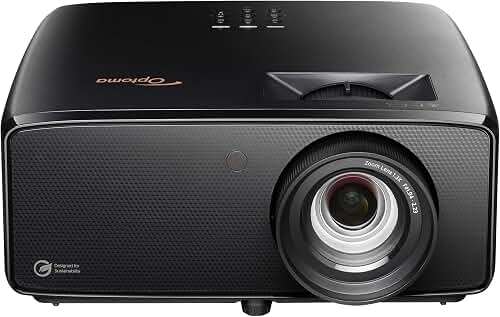
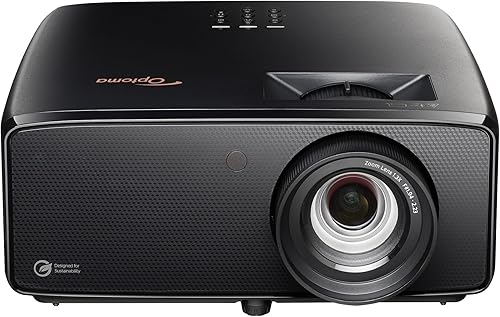
| Optoma UHZ36 4K UHD Laser HDR Home Theater Projector - Black | Optoma | 3.9 | See The Difference 4K UHD Makes |
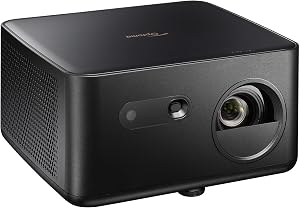
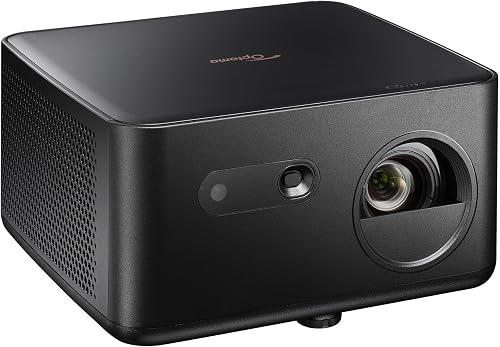
| Optoma Photon Life PK32 - 4K UHD, 1,100 Lumens, LED, Premium Auto-Se… | Optoma | 4.4 | With 4K UHD resolution, experience remarkable visuals, vibrant color and details up to 150” image for big…; Experience smooth, responsive game play and an immersive experience with low input lag 16ms (4K@60Hz) and… |
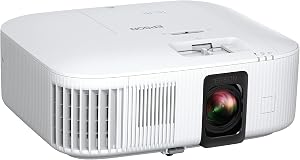
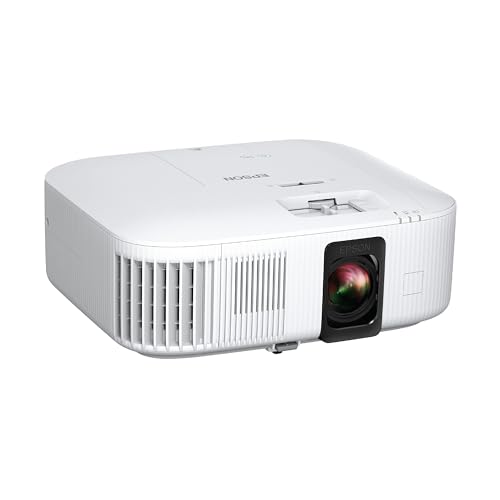
| Epson Home Cinema 2350 4K PRO-UHD Smart Gaming Projector with Androi… | Epson | 3.9 | 4K PRO-UHD (1); 2,800 lumens of color and white brightness (6) deliver a bright, vivid picture in a variety of lighting… |
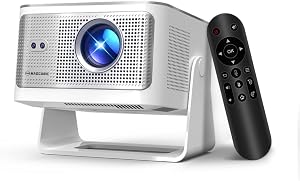
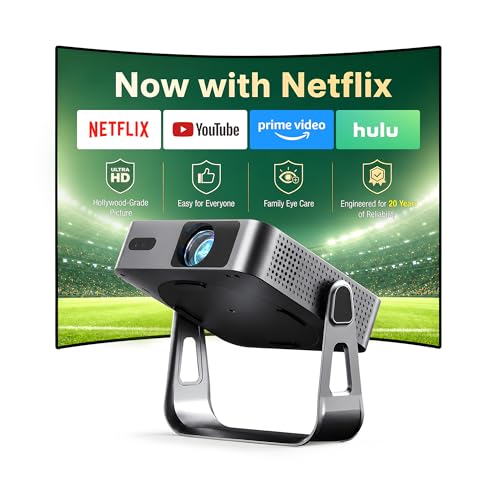
| 【Officially-Licensed APP & Native 1080P】Thinnest 1.81" Smart Mini Pr… | VOPLLS | 4.4 | Enjoy officially licensed content, secure and regularly updated, with stunning 4K HDR clarity; The smart projector 4k combines automatic fast focus and 6D all-around keystone correction technology, from…; Every frame is vivid, color-accurate, and razor-sharp, supported by 4K playback compatibility—perfect for… |
Reviewed by the ProjVue Editorial Team
Finding the right anker nebula capsule 3 laser battery life comes down to matching the features to how you will actually use it.
Last Updated: August 2026 Written by the ProjVue Editorial Team
The number on the box is a best case, measured under conditions you will not reproduce. That is true of every battery-powered projector, and it is the reason the Anker Nebula Capsule 3 Laser gets returned by people who bought it for a use case its runtime does not cover.
This page is about runtime specifically: how the published battery figure is derived, what each setting costs you in minutes, and which of the common portable scenarios — a campsite, a long flight, a power cut, a hotel room — the Capsule 3 Laser actually survives on its own cell.
How the Published Figure Is Derived
Manufacturer runtime figures for portable projectors are, almost universally, quoted in the projector's lowest-output mode with the internal speaker at a modest volume, playing content from local storage or a wired source. That is a legitimate measurement. It is also the single most efficient way the device can possibly be operated, and it is not how anyone uses it.
Three things separate the quoted figure from what you get:
Brightness mode. A laser light source at full output is the dominant power draw in the device. Eco or battery mode typically cuts output substantially, and runtime scales roughly inversely with it. This is the largest single variable, and it is the one the published figure assumes you have already accepted.
Audio. The internal speaker is the second-largest draw, and volume is not linear in power. Running the built-in speaker loud enough to be heard outdoors, over wind or a fire pit, can shorten runtime meaningfully compared with the quoted figure. Sending audio out to a separate Bluetooth speaker moves that load off the projector's cell — but Bluetooth transmission has a cost of its own, and a paired soundbar is usually the better arrangement anyway.
Wireless streaming. Streaming over Wi-Fi keeps the radio and the decoder busy for the whole session. Local playback from a USB stick or a wired HDMI source is meaningfully cheaper. Casting from a phone is the most expensive option of the three.
Stack all three at their worst — full brightness, loud internal speaker, Wi-Fi streaming — and a portable projector can land at well under half its quoted runtime. That is not a defect and it is not dishonest marketing. It is the difference between a standardised measurement and a real session.
The Runtime Question, Scenario by Scenario
The useful way to think about this is not "how many hours" but "does it finish the thing I am watching".
A single feature film. Most films run 100 to 140 minutes. A portable projector that survives one film in eco mode, with external audio, is doing its job. This is the scenario the category is designed around and the one that works most reliably.
Two films back to back. This is where portable units generally fail without external power. Plan for a power bank.
A campsite evening. Sunset to bedtime is typically three to four hours of use, often with the projector left running between things. Assume you will need external power. The relevant spec here is not battery capacity but whether the projector accepts USB-C Power Delivery input at a wattage high enough to run while charging — some portables will charge but will not run at full brightness from a power bank, and some will only trickle-charge while projecting.
A long-haul flight. Almost never viable, and usually not permitted. Cabin projection onto a seat back or bulkhead is impractical geometrically, airline policy generally prohibits it, and the runtime would not cover the flight regardless. Treat portable projectors as ground equipment.
A power outage. This is a genuinely good use case, and the one people overlook. A projector plus a phone or tablet as source gives a household something to do during an evening outage, and the projector's own cell means it works when the wall does not. The relevant question is whether you can recharge it — from a car, a power station, or a solar setup — if the outage runs more than a day.
A hotel or rental room. Mains power is available, so battery runtime is irrelevant and the real constraints are throw distance to the wall and whether the room has a surface worth projecting onto. Battery capacity is dead weight here.
Settings That Buy You Minutes
In rough order of how much runtime each recovers:
- Drop to eco or battery brightness mode. The largest single lever, by a wide margin. In a genuinely dark environment — which is where you are if you are running on battery outdoors after sunset — full brightness is usually unnecessary anyway.
- Use external audio. A small Bluetooth speaker with its own battery moves a substantial load off the projector. It also sounds better than any speaker that fits inside a capsule-sized chassis.
- Play from local storage or wired HDMI rather than streaming over Wi-Fi.
- Shrink the image. A smaller projected image at the same brightness setting looks brighter, which means you can drop the brightness setting further. Moving the projector two feet closer to the wall is free runtime.
- Turn off keystone and autofocus polling. Continuous auto-correction keeps sensors and motors active. Setting the geometry once and locking it removes that draw.
- Let it cool before charging. Charging a warm lithium cell is slower and generates more heat, which the projector then spends power dissipating.
What to Check on the Spec Sheet Before You Buy
If runtime is your buying criterion, four published lines matter more than the headline hours figure.
Battery capacity in watt-hours, not milliamp-hours. Wh is comparable across devices; mAh is meaningless without the cell voltage. Wh also determines whether the unit is airline-legal in a carry-on — the common threshold is 100 Wh without airline approval.
Whether it runs at full brightness on USB-C PD input, and at what wattage. This is the difference between "works all evening with a power bank" and "charges slowly while off". Check the required input wattage against what your power bank can actually deliver.
Whether the battery is user-replaceable. On most compact portables it is not, which makes battery degradation a lifespan limit for the whole device rather than a consumable.
The quoted runtime's stated conditions. If the specification does not say which brightness mode and which source the figure was measured in, treat the number as a ceiling and assume real use lands well below it.
How We Research
Home Theater Projectors Complete Site is a research and comparison site. Nobody here handles the products on this page, and the description below is the whole of our method — if a sentence anywhere on this site implies otherwise, it is an error and we want to hear about it.
What the comparison is built from. Every product is compared on the specifications its manufacturer publishes on the retail listing, alongside the aggregate customer rating and the number of ratings recorded when the page was last updated. Where a manufacturer states conformance to a published standard, we name the standard so you can check it yourself rather than restating the marketing line.
How products get onto the list. Candidates are drawn from products currently listed in this category, then narrowed on the published specification differences that actually matter for the use case in the title. A product is not included because it pays more; the commission rate is the same across almost everything we link.
What gets re-checked. Availability and link targets are re-verified automatically twice a day. Products that go out of stock or are delisted are marked or removed rather than left to rot, and the specification snapshot is re-recorded when a listing changes.
What we do not do. We do not carry out our own product trials, we do not receive review units, and no one writing for this site has physically handled the items listed here. Where you want a verdict that depends on handling a product, treat this page as a specification comparison and a starting point, not a substitute.
Frequently Asked Questions
Can I run it from a USB-C power bank while projecting? Check the required input wattage on the specification sheet against your power bank's rated Power Delivery output. Many compact projectors will charge from a low-wattage bank but will not sustain full brightness from one, and will draw down the internal cell anyway.
Does using an external Bluetooth speaker extend battery life? Yes, meaningfully. The internal speaker is one of the two largest loads in the device. A separate speaker with its own battery moves that load off the projector, and the Bluetooth transmit cost is far lower than driving a speaker directly.
Is battery life affected by cold weather? Yes. Lithium cells deliver less usable capacity at low temperatures, and the effect is pronounced below freezing. A projector taken from a warm car to a cold campsite will show noticeably shorter runtime until it warms up.
Is it airline carry-on legal? That depends on the cell's watt-hour rating, which is the figure airlines assess. Devices under 100 Wh are generally permitted in carry-on without prior approval; above that, airline approval is required and some carriers refuse outright. Check the published Wh figure and your carrier's current policy, and note that using a projector in the cabin is a separate question from carrying one.
Does brightness mode really change runtime that much? It is the dominant variable. The laser light source is the largest power consumer in the device, and runtime scales roughly inversely with output. Any runtime figure quoted without a brightness mode attached to it is not comparable to any other.
Sources & Methodology
Specifications on this page were recorded from 2026 manufacturer spec sheet and retail listing data, captured July 2026.
Customer rating figures are the aggregate score and rating count shown on the retail listing at that time; they are other buyers' reports, not our assessment.
Independent references for this category. These are places to verify a category claim for yourself. We link them because they are authoritative, not to imply their tests were run on our behalf:
- ISO 21118 — data-projector specification disclosure
- FTC Endorsement Guides — the disclosure rules this site is bound by
- CPSC recall database — check any product for open safety recalls
About the Author
This page was written by the ProjVue editorial team. ProjVue is a research and comparison site: nobody here handles the products discussed on this page, and our recommendations are not based on physically testing, owning, or using them, nor on systematically reading customer reviews. The analysis is built from the specifications manufacturers publish and Amazon's official product data for each listing, plus the geometry and brightness arithmetic those specifications imply and publicly documented standards you can check for yourself. We do not accept payment for placement or rankings.
Key Takeaways
- Choosing the right anker nebula capsule 3 laser battery life means matching the key features to your specific needs and budget
- Read real customer reviews and check the return policy before you commit
- Also covers: nebula capsule 3 laser runtime on battery
- Also covers: portable projector usb-c power delivery while projecting
- Also covers: projector battery watt hours airline carry on
- Compare value across models — the priciest option is not always the best fit


