As an Amazon Associate this site earns from qualifying purchases.
Top Picks
Measure First: The Lux Reading That Decides It
Before choosing, get one number: the ambient illuminance falling on your screen wall at the worst time of day.
A phone light-meter app, held flat against the screen wall with its sensor facing into the room, is accurate enough for this decision. Take the reading with blinds and curtains in the position you will actually use them, at the brightest hour, not with everything drawn shut for the test.
Then read off the band:
Finding the right alr screen vs more lumens for a bright room comes down to matching the features to how you will actually use it.
| Ambient at screen wall | What the room really is | Which lever moves the needle |
|---|---|---|
| Under 50 lux | Blackout basement, dedicated theatre, night viewing | Neither. Buy a good white or grey matte screen and spend the money on the projector's contrast, not its brightness. |
| 50–150 lux | Evening living room, lamps on, blinds drawn | Brightness. A 2,000–2,500 lumen unit on a neutral screen is enough. ALR is optional and can cost you viewing angle. |
| 150–400 lux | Daytime living room, indirect light, north-facing | ALR screen first. This is the band where the screen does more than the projector. |
| 400–1,000 lux | Direct sun on a wall, south-facing room, conservatory | Both, and accept a compromise. Consider whether a TV is the honest answer for daytime and the projector for evenings. |
| Over 1,000 lux | Sunroom at noon, glass slider, skylights | Neither works. Light control comes first — you are buying blinds, not optics. |
Reviewed by the ProjVue Editorial Team
Last Updated: August 2026 Written by the ProjVue Editorial Team
There are two ways to fix a projector image that looks washed out in daylight, and they cost about the same money. You can buy a brighter projector, or you can buy an ambient-light-rejecting screen. Almost every buying guide tells you to do the first. In a lot of rooms the second is the better spend, and in some rooms the first does not work at all.
This page is the decision framework, not a product list. It works out which of the two levers your room actually responds to, using numbers you can measure with a phone.
Why More Lumens Is Sometimes the Wrong Answer
Ambient light does not dim a projected image. It adds a uniform layer of light on top of it. That distinction is the whole argument.
Black on a projected image is simply the absence of projected light — it is the screen surface reflecting whatever else is in the room. Adding projector lumens raises the white level but does nothing to the black level, because the black level is set by the room, not by the projector. So brightness alone raises contrast ratio only by pushing the top end up.
Doubling projector output takes you from, say, 2,000 to 4,000 lumens. In a room with meaningful daylight, that turns a grey-looking image into a brighter grey-looking image. Highlights snap back. Shadow detail does not return, because the shadows were never the projector's to control.
An ambient-light-rejecting screen attacks the other end. Its optical structure — angular-reflective layers on a long-throw ALR screen, or a lenticular Fresnel structure on a UST ALR screen — accepts light arriving from the projector's direction and rejects light arriving from above and the sides. It lowers the black level. That is the half of the contrast ratio that brightness cannot touch.
The band that surprises people is the last one. Above roughly 1,000 lux at the screen, there is no consumer projector and no screen material that produces a watchable image. Money spent on either lever is wasted until the room is treated.
What an ALR Screen Actually Costs You
ALR is not free performance. The structures that reject off-axis light have side effects, and they are the reason ALR is the right answer in one band and the wrong answer in another.
Viewing angle narrows. Angular-reflective ALR materials concentrate light back toward the centre of the room. Seats at the far edges of a wide sofa can see a visibly dimmer, sometimes colour-shifted image. If your seating is spread across a wide arc, this matters more than the contrast gain.
Uniformity gets harder. Higher-gain and lenticular materials can show hotspotting — a visibly brighter patch in the centre of the image — especially on larger screens and with projectors mounted close to the screen axis.
The screen type has to match the projector type. A UST projector throws light upward from below and needs a lenticular Fresnel ALR screen. A ceiling-mounted long-throw projector throws light roughly horizontally and needs an angular-reflective ALR screen. Pairing them the wrong way round produces a dark, blotchy image. This is the single most common expensive mistake in the category.
Flatness becomes critical. ALR materials are less forgiving of ripple and waves than matte white. A tab-tensioned or fixed-frame construction is effectively mandatory; a cheap pull-down ALR screen will show its own surface.
What Extra Lumens Actually Cost You
Brightness has its own bill.
Fan noise scales with light output. A projector run at full brightness runs its cooling harder. Units that are quiet in eco mode can move into the mid- to high-30 dB range at maximum output, which is audible from the sofa.
Black level often gets worse. Many projectors achieve their headline brightness figure in a mode that opens the iris fully and pushes the lamp or laser hard, at a measurable cost to native contrast. The brightest mode is frequently also the least accurate one, with a green-shifted white point.
Lamp or laser life shortens in high-output modes, and the drop-off is not linear.
Screen size eats it. Screen luminance falls roughly with screen area. Going from a 100-inch to a 120-inch diagonal is about a 44 per cent increase in area, which consumes most of what you gained by moving from a 2,000 to a 2,800 lumen projector. If you are buying brightness to fight ambient light, do not simultaneously buy a bigger screen with it.
The Arithmetic That Ties Them Together
Screen luminance in foot-lamberts is approximately:
fL = (lumens × screen gain) ÷ screen area in square feet
A 100-inch 16:9 screen is about 29.8 square feet. So a 2,500 lumen projector on a 1.0-gain screen delivers roughly 84 fL — far above the 16 fL SMPTE reference for a dark room, which is why a bright projector looks harsh at night and why brightness alone is not a strategy.
Now add ambient light. The perceived contrast is set by the ratio between that projected white level and the black level, and the black level is (ambient light reaching the screen) × (how much of it the screen reflects back at you). An ALR screen can reject a large fraction of off-axis ambient light while preserving on-axis projector light. That is a change to the denominator. Brightness only changes the numerator.
Once you frame it that way, the rule falls out: if your problem is that whites look dim, buy lumens. If your problem is that blacks look grey, buy an ALR screen. Most people in a 150–400 lux room describe the second problem and are sold the first solution.
Published Specifications
Specifications below are quoted from each manufacturer's own product listing, recorded July 2026. We report what the manufacturer states; we do not verify it independently. Customer ratings are other buyers' reports, not our assessment.
| Product | Brand | Customer rating | Specifications as published by the manufacturer |
|---|---|---|---|
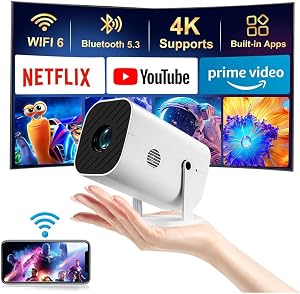
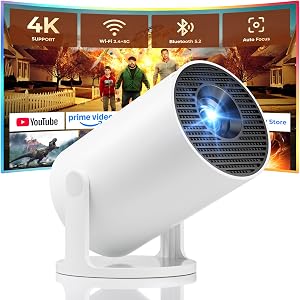
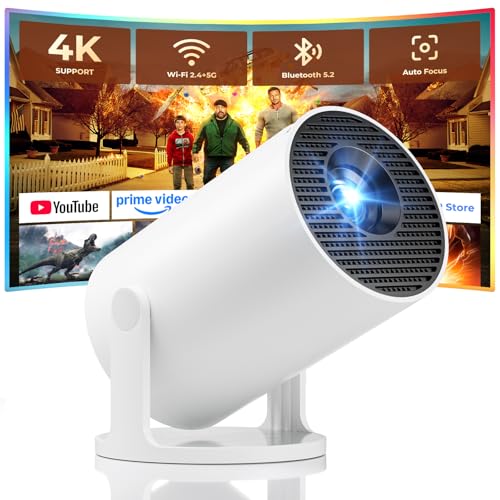
| YGSKK Mini Projector with Wifi and Bluetooth, Built-in Apps,Movie Pr… | YGSKK | 4.6 | Fi 6 technology, compatible with Wi-Fi 6, 5G and 2.4G, offering faster connection speed and stronger…; Moreover, this movie projector is compatible with 4K, allowing you to enjoy the perfect experience of 4K…; In addition, this portable projector can project a large screen of 50 to 200 inches |
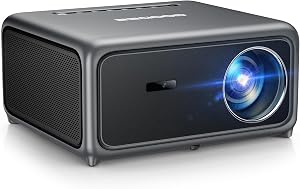
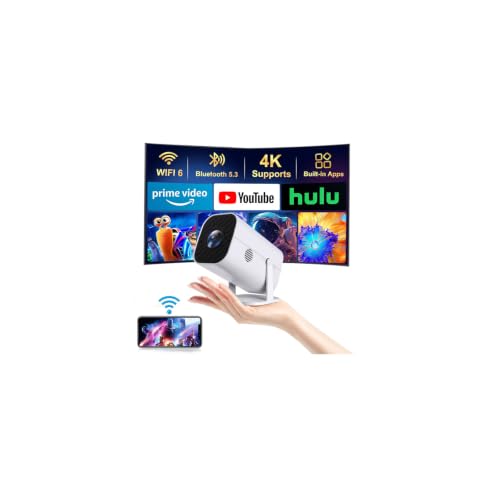
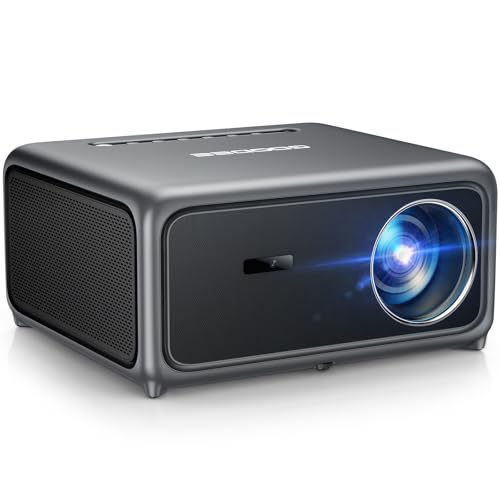
| GooDee 4K Smart Projector with 5G WiFi 6 & Bluetooth, ToF AI Auto Fo… | GOODEE | 4.5 | this 4K Projector brings every scene to life with vivid, lifelike precision; Instant Smart Calibration with 1ms ultra-low latency tunes images up to 10× faster than standard systems; This smart outdoor projector features Dolby Audio-certified 30W dual speakers, delivering immersive 3D… |
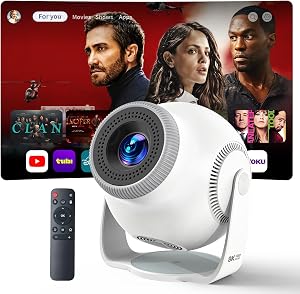
| Mini Projector, Portable Projector with Wifi and Bluetooth, Built in… | ClokoWe | 4.5 | Dual-band WiFi 2.4G + 5G ensures fast and stable wireless streaming; Supports 4K video playback via USB drive for smooth viewing; The 0.9:1 short throw ratio enables big-screen projection in small spaces, supporting 30–200 inch screen… |
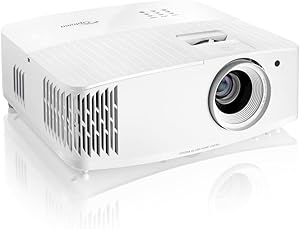
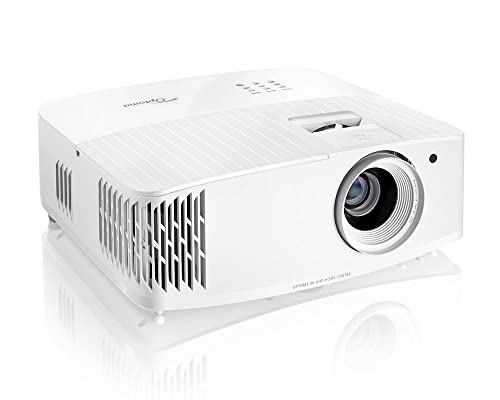
| Optoma UHD38x Bright, True 4K UHD Gaming Projector | 4000 Lumens | 4… | Optoma | 3.7 | True 4K Ultra HD |
How We Research
Home Theater Projectors Complete Site is a research and comparison site. Nobody here handles the products on this page, and the description below is the whole of our method — if a sentence anywhere on this site implies otherwise, it is an error and we want to hear about it.
What the comparison is built from. Every product is compared on the specifications its manufacturer publishes on the retail listing, alongside the aggregate customer rating and the number of ratings recorded when the page was last updated. Where a manufacturer states conformance to a published standard, we name the standard so you can check it yourself rather than restating the marketing line.
How products get onto the list. Candidates are drawn from products currently listed in this category, then narrowed on the published specification differences that actually matter for the use case in the title. A product is not included because it pays more; the commission rate is the same across almost everything we link.
What gets re-checked. Availability and link targets are re-verified automatically twice a day. Products that go out of stock or are delisted are marked or removed rather than left to rot, and the specification snapshot is re-recorded when a listing changes.
What we do not do. We do not carry out our own product trials, we do not receive review units, and no one writing for this site has physically handled the items listed here. Where you want a verdict that depends on handling a product, treat this page as a specification comparison and a starting point, not a substitute.
Frequently Asked Questions
Can I use an ALR screen in a dark room? You can, but there is nothing for it to reject, and you inherit the narrower viewing cone and the hotspot risk for no benefit. A dark room is better served by a neutral matte white or a light grey surface.
How many lumens do I need for a living room with the blinds open? The honest answer is that lumens is the wrong unit for that question. Measure the lux at the screen wall first. In the 150–400 lux band, roughly 2,500–3,500 lumens paired with a correctly matched ALR screen produces a watchable daytime image on a 100-inch screen. Below 150 lux you need less than you think; above 400 lux no lumen figure rescues an untreated room.
Does a UST laser TV solve this on its own? Only when it is paired with a lenticular ALR screen designed for UST geometry. A UST projector on a plain white wall in a bright room is one of the worst-value configurations in the category, because the projector's price assumes a screen that has not been bought.
What is the cheapest thing that improves a bright room? Light control at the window, followed by killing the light sources directly above and beside the screen. A dark ceiling and dark side walls near the screen reduce the light that bounces back onto the screen surface, and cost nothing but paint.
Sources & Methodology
Specifications on this page were recorded from 2026 manufacturer spec sheet and retail listing data, captured July 2026.
Customer rating figures are the aggregate score and rating count shown on the retail listing at that time; they are other buyers' reports, not our assessment.
Independent references for this category. These are places to verify a category claim for yourself. We link them because they are authoritative, not to imply their tests were run on our behalf:
- ISO 21118 — data-projector specification disclosure
- FTC Endorsement Guides — the disclosure rules this site is bound by
- CPSC recall database — check any product for open safety recalls
About the Author
This page was written by the ProjVue editorial team. ProjVue is a research and comparison site: nobody here handles or uses the products discussed on this page. The analysis is built from the specifications manufacturers publish and Amazon's official product data for each listing, the geometry and brightness arithmetic those specifications imply, and publicly documented standards you can check for yourself. We do not systematically read customer reviews, and we do not accept payment for placement or rankings.
Key Takeaways
- Choosing the right alr screen vs more lumens for a bright room means matching the key features to your specific needs and budget
- Read real customer reviews and check the return policy before you commit
- Also covers: how many lux is a bright room for a projector
- Also covers: does an alr screen improve contrast
- Also covers: projector washed out in daylight fix
- Compare value across models — the priciest option is not always the best fit