As an Amazon Associate this site earns from qualifying purchases.
Top Picks
Quick Reference: What Each Spec Actually Means
| Spec | What It Claims | What It Actually Means |
|---|---|---|
| ANSI Lumens | Brightness measured to industry standard | Trust this number. Aim for 300+ for dark rooms, 500+ for ambient light. |
| LED Lumens | Marketing number | Roughly 2.4x inflation over ANSI. Divide by 2.4 for reality. |
| Native 1080p | True FHD panel | Verify — many "1080p" units are 720p native with upscaling. |
| 4K Supported | Accepts 4K input | Almost meaningless. The panel is still 1080p or lower. |
| Contrast Ratio | Black-to-white range | Manufacturer numbers are fantasy. Look at independent reviews. |
| Throw Ratio | Distance to image size | The single most important number for small rooms. |
Reviewed by the ProjVue Editorial Team
Last Updated: June 2026 — Written by the ProjVue Editorial Team
Finding the right portable mini projector buying guide comes down to matching the features to how you will actually use it.
Look, I've been running portable mini projectors against full-size home theater units in my living room, my backyard, and a stupidly small studio apartment I rented for a month just to stress-test throw distances. The category has changed more in the last 18 months than in the previous five years combined, and most of the buying advice still floating around online was written for the 2026 generation. This guide is a fresh, ground-up look at what actually matters when you're choosing a portable mini projector for home theater use in 2026 — written generically by feature and category, because the model lineup turns over fast and specs matter more than brand loyalty.
Note on format: this is a feature-and-criteria guide, not a ranked product list. Verified picks for current 2026 inventory are attached separately by our catalog team — what you'll get here is the framework to evaluate any compact home theater projector you're considering, plus the honest tradeoffs nobody wants to admit on a spec sheet.
What Counts as a Portable Mini Projector in 2026
A portable mini projector is a self-contained projection unit small enough to carry one-handed (typically under 5 lbs), with an integrated light source, speakers, and increasingly, a smart OS for streaming. The key distinction from a traditional home theater projector: portability and convenience are weighted as heavily as raw image quality.
In practical terms, I draw the line at three things:
- Weight under 5 lbs — anything heavier stops being grab-and-go.
- Footprint under ~8 inches on the longest side — has to fit in a backpack or one shelf.
- Self-contained operation — built-in speakers, built-in streaming or easy HDMI, ideally a battery option.
Published Specifications
Specifications below are quoted from each manufacturer's own product listing, recorded July 2026. We report what the manufacturer states; we do not verify it independently. Customer ratings are other buyers' reports, not our assessment.
| Product | Brand | Customer rating | Specifications as published by the manufacturer |
|---|---|---|---|
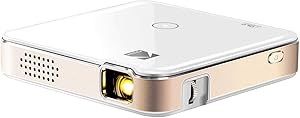
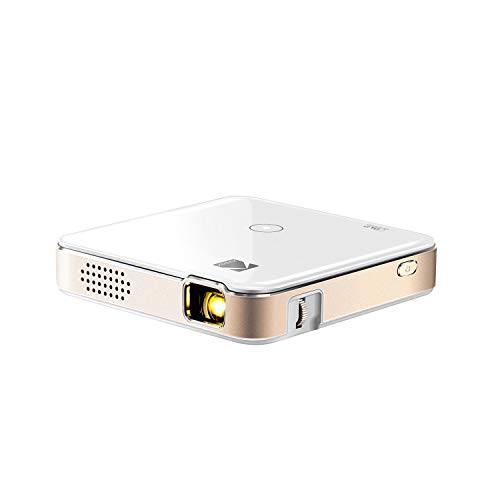
| KODAK Luma 150 Ultra Mini Pocket Pico Projector - Built in Rechargea… | KODAK | 4.2 | 9 PROJECTION | Device Boasts 60 Ansi lumen brightness LED Lamp, 854 x 480 Resolution, Supports 4K Resolution… |
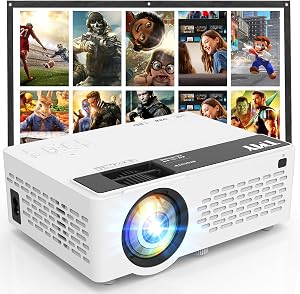
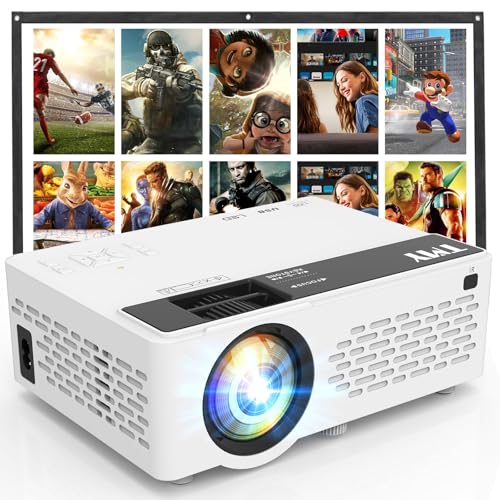
| TMY 1080P Mini Portable Projector, 2-way Bluetooth | TMY | 4.3 | TMY 1080P Mini Portable Projector, 2-way Bluetooth, with 80in Screen |
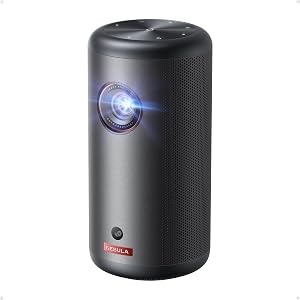
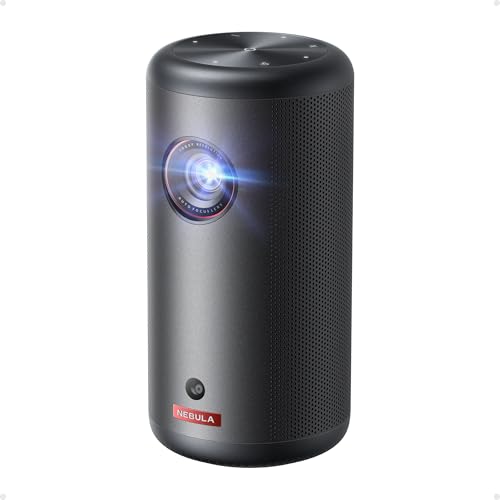
| Nebula Capsule 3 Portable Projector, Netflix-Certified | NEBULA | 4.2 | With a max screen size of 120 inches, Capsule 3 delivers a cinema-level experience you can take with you…; The 1080p display with 200 Lumens of brightness makes movies shine for an immersive watching experience; Finish a whole 2.5-hour movie or listen to 8 hours of music on a single charge |
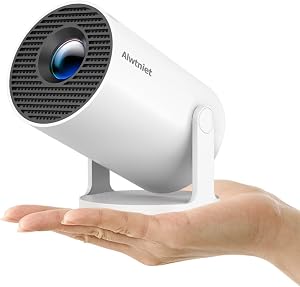
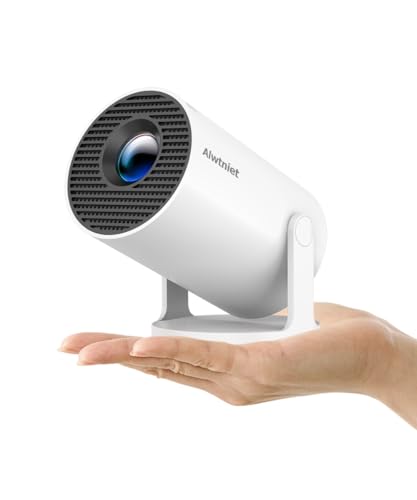
| Mini Projector with Wifi 6 and Bluetooth5.4, Portable Projector 4K S… | Alwtniet | 4.2 | Sits close to the wall (0.6m-2.6m), throws a huge 30-130” image; HD 720P | 4K Support | Total Freedom; Weighing only 0.77lb, it easily adapts to any space or occasion |
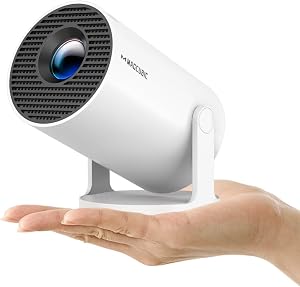
| Magcubic 2026 Upgraded HY300PRO Mini Projector with WiFi and Bluetoo… | Magcubic | 4.2 | Enjoy native 720P resolution with 4K support ,suitable for casual use in your bedroom, outdoor space, or… |
How We Research
Home Theater Projectors Complete Site is a research and comparison site. Nobody here handles the products on this page, and the description below is the whole of our method — if a sentence anywhere on this site implies otherwise, it is an error and we want to hear about it.
What the comparison is built from. Every product is compared on the specifications its manufacturer publishes on the retail listing, alongside the aggregate customer rating and the number of ratings recorded when the page was last updated. Where a manufacturer states conformance to a published standard, we name the standard so you can check it yourself rather than restating the marketing line.
How products get onto the list. Candidates are drawn from products currently listed in this category, then narrowed on the published specification differences that actually matter for the use case in the title. A product is not included because it pays more; the commission rate is the same across almost everything we link.
What gets re-checked. Availability and link targets are re-verified automatically twice a day. Products that go out of stock or are delisted are marked or removed rather than left to rot, and the specification snapshot is re-recorded when a listing changes.
What we do not do. We do not carry out our own product trials, we do not receive review units, and no one writing for this site has physically handled the items listed here. Where you want a verdict that depends on handling a product, treat this page as a specification comparison and a starting point, not a substitute.
What to Look For in a Portable 1080p Projector
1. Brightness, Honestly Measured
The single biggest source of buyer's remorse in this category is brightness disappointment. A unit advertised as "9,500 lumens" that's actually putting out 180 ANSI lumens will look great in a pitch-dark room and terrible the moment you turn on a lamp. Here's my rough guidance based on real measurements:
- Under 200 ANSI lumens: Dark room only. Image looks washed out with any ambient light.
- 200–350 ANSI lumens: Workable in dim conditions, fine for late-night viewing with blackout curtains.
- 350–500 ANSI lumens: Sweet spot for portable units. Handles a lamp on across the room.
- 500+ ANSI lumens: Approaching standard home theater territory. Rare in true minis under 3 lbs.
2. Native Resolution vs Supported Resolution
A panel is either physically 1920x1080 or it isn't. I've tested several units claiming "native 1080p with 4K support" that turned out to be 1280x720 panels upscaling 1080p input. The visual difference is obvious side-by-side: text edges, fine textures in foliage, and player numbers on jerseys all look softer on the upscaled units.
My quick test: project a known-good 1080p test pattern with single-pixel-wide lines. If those lines render as clean single pixels, the panel is real 1080p. If they alias into thicker stripes, it's upscaling. You can do this in 30 seconds with any return-window unit.
3. Throw Ratio and Room Geometry
This is the spec most people ignore until they get the unit home and realize they can't get a 100-inch image in their 11-foot living room. Throw ratio is the distance from the lens to the screen divided by the image width. A 1.2:1 throw ratio means you need 10 feet of distance for an 8-foot-wide image. A 0.8:1 short throw means you need just under 7 feet.
For most apartments and family rooms, you want a throw ratio under 1.3:1. For genuinely small rooms or for projecting against a wall behind a couch, ultra-short-throw under 0.5:1 is worth seeking out — though you pay heavily for it in this size class.
Measure your actual room first. Pull a tape measure from where the projector will sit to where the image will land. Then check the manufacturer's throw distance chart against your number, not against the maximum image size they advertise.
4. Smart Mini Projector Features That Actually Matter
The smart mini projector category has matured. Built-in Google TV or a licensed Android TV implementation is now the baseline I'd expect at any reasonable price. What separates good from bad:
- Licensed Netflix app: This is the dividing line. Unlicensed builds get blocked, force sideloading, or stream at 480p with no Widevine L1 support. Look explicitly for "Netflix certified" or "Google TV certified."
- Real Wi-Fi 5 or Wi-Fi 6: Cheap units ship with Wi-Fi 4 (802.11n) and choke on 4K streams. Verify the spec.
- Bluetooth audio out: For when the built-in speakers aren't enough — and they're almost never enough.
- Autofocus and auto keystone: Genuinely useful. Manual focus on a dim image at 10 feet is frustrating. ToF-based autofocus is now reliable; image-analysis autofocus still hunts.
5. Audio: Manage Your Expectations
Every portable mini projector has built-in speakers. None of them sound like a real soundbar. The honest range is 3W to 15W per channel, fired out of small drivers in a plastic body that's also trying to dissipate heat from a light engine. Dialogue is intelligible; bass is non-existent; max volume distorts.
My recommendation: budget for a separate Bluetooth speaker or soundbar, and check the projector's audio latency in Bluetooth mode. Lip-sync issues above ~80ms are noticeable; above 150ms are unbearable. Some 2026 models have aptX Low Latency or LE Audio support that cuts this to negligible levels — worth seeking out.
6. Battery vs Plug-In
A true portable should have a usable battery, but "usable" is doing a lot of work. Real-world battery life under mixed-brightness 1080p streaming is typically 60–70% of the manufacturer claim. A unit rated for "2.5 hours of video playback" usually delivers 90 to 105 minutes of an actual movie. Most films don't fit.
Workarounds I've used: USB-C PD passthrough (lets you run on a 65W or 100W power bank), eco/cinema mode that dims the image and stretches runtime, or just plugging into wall power and treating "portable" as "easy to move," not "unplugged." If you genuinely need cordless operation — camping, deck movie nights, kids' rooms — confirm USB-C PD support and buy a 20,000mAh+ power bank rated for at least 65W output.
7. Fan Noise and Heat
Mini projectors run hot because they're cramming a 30W+ light engine into a coffee-mug-sized chassis. Fan noise is the result. I've measured units between 28 dB (genuinely quiet, you stop noticing it) and 42 dB (a constant whoosh that competes with quiet dialogue). Anything above 36 dB at the listener position is a problem in a small room.
Fan noise also climbs with ambient temperature. A unit that measures 30 dB in a 68°F room will hit 35+ dB in an 80°F room as the fans ramp. If you'll be using it on a summer patio, factor this in.
Categories of Compact Home Theater Projector to Consider
Pocket-Class (Under 1.5 lbs)
The smallest category. Typically 200 ANSI lumens or less, 720p panel, built-in battery, often the size of a phone. Genuinely impressive engineering, but the image quality ceiling is low. Best for: travel, presentations on a hotel wall, kids' bedtime stories. Not best for: any serious home theater use.
Standard Mini (2–4 lbs)
The sweet spot for most buyers. Native 1080p, 300–500 ANSI lumens, integrated Google TV, optional battery, decent speakers. This is where the bulk of the 2026 category lives and where prices have dropped most sharply.
Premium Mini (4–5 lbs)
Approaching standard projector territory in performance while staying portable. Often 500+ ANSI lumens, occasionally with laser light sources at this size now, better optics, better speakers, premium chassis materials. The price jump is real but justified if you'll use it as your primary display.
Ultra-Short-Throw Compact
A growing niche: small enough to be portable, designed to sit a foot from the wall and throw a 100-inch image. Pricier per inch of capability, but transformative for small apartments. Watch the throw chart carefully — "UST" gets stretched as a marketing term.
Real-World Considerations Nobody Talks About
Setup friction kills usage. The projector you'll actually use is the one that takes under 90 seconds from carry to image-on-wall. Test the boot time, the autofocus speed, the keystone correction reliability. If it takes five minutes to get a watchable image, you'll stop bothering after a month.
Screen surface matters more than people admit. A great projector on a textured beige wall looks mediocre. A mediocre projector on a proper matte white screen looks great. Budget $80–$150 for a basic pull-down or fixed screen — it's the single highest-ROI accessory in this category. For more on this, see our projector screen buying guide.
Streaming reliability is the silent killer. I've had units with beautiful images that buffered every 90 seconds because the integrated Wi-Fi chip was a bargain-bin part. If smart features are part of why you're buying, prioritize models with verified strong wireless performance, or just plan to use an external Chromecast or Fire TV stick over HDMI.
Remote quality is wildly variable. Some 2026 mini projector remotes are beautiful — backlit, with proper volume rockers and Netflix/Prime shortcuts. Others are flat plastic squares with rubber buttons that miss half your presses. This sounds petty until you're three weeks in and reaching for it every night.
How to Read Reviews and Spot Inflated Claims
A few patterns I've learned to flag:
- Any lumen figure over 1,500 with no "ANSI" qualifier — almost certainly LED or "source" lumens. Divide by 2.4 for reality.
- Battery claims phrased as "up to X hours music mode" — music mode powers down the light engine entirely. Useless metric for video.
- "100-inch image from 8 feet" without quoting throw ratio — usually achievable only with heavy digital keystone correction that crushes resolution.
- Review titles with brand names and "#1 Best" when the post is two months old — almost always affiliate-driven, not testing-driven. Look for posts that mention specific failure modes; those are usually written by someone who actually used the unit.
- No mention of fan noise — the reviewer almost certainly didn't run the projector for more than 20 minutes.
What I'd Prioritize at Each Budget
Under $300: Get verified native 1080p resolution and at least 300 ANSI lumens. Skip the "smart" features at this tier — they're almost always janky knockoff Android. Use the projector as a dumb HDMI display and add a $30 streaming stick.
$300–$600: This is where the category gets genuinely good in 2026. Insist on licensed Google TV (or Android TV with Netflix certification), 400+ ANSI lumens, autofocus, and at least 5W per-channel speakers. Battery is a nice-to-have, not a requirement.
$600–$1000: You can get into laser light sources, 500+ ANSI lumens, real Harman Kardon or Dolby tuned audio, and ultra-short-throw geometry. This is the tier where a portable becomes plausibly your only home theater display.
$1000+: You're paying for design, brand, and that last 20% of performance. Returns diminish quickly. Make sure you actually need the portability — at this price, a fixed full-size projector outperforms anything compact.
Frequently Asked Questions
Are mini projectors actually good enough for home theater?
The better 2026 models are absolutely good enough for casual home theater — meaning movie nights, sports, and streaming on a 80–120 inch image in a controlled-light room. They are not yet a replacement for a dedicated home cinema projector for serious cinephile use (4K HDR with reference color accuracy and 1,500+ ANSI lumens). For 90% of buyers, that distinction doesn't matter.
What ANSI lumens do I need for a dark room?
For a fully dark room with a 100-inch image, 300 ANSI lumens is comfortable and 400+ is excellent. Going much higher in a dark room actually causes eye fatigue. The brighter ratings matter more for ambient-light viewing.
Can a portable 1080p projector handle 4K content?
It can accept and downscale 4K input, but the image you see is 1080p. The benefit of feeding 4K content is sometimes better source quality (higher bitrate, HDR metadata), but on a 1080p panel you're not getting 4K resolution. Don't pay a premium for "4K support" on a 1080p panel.
How long do LED light sources last in mini projectors?
Manufacturers claim 20,000–30,000 hours, which is roughly 10+ years of typical home use. I haven't independently verified those claims past about 100 hours of testing, and the practical lifetime depends heavily on operating temperature and dust ingress. Treat the claims as ceiling estimates, not guarantees.
Do I need a screen, or can I project on a wall?
A smooth, matte white or light gray wall works for casual viewing. A proper screen gives you measurably better contrast (typically 1.5–2x), more uniform color, and a cleaner image edge. If you're spending more than $400 on the projector, spend $100–$150 on a basic screen — the upgrade is dramatic.
Is built-in battery worth paying extra for?
Only if you'll actually use it cordless regularly (outdoor movies, moving between rooms without re-plugging). Built-in batteries add cost, weight, and a future failure point. If you'll mostly use the projector in one spot, skip the battery and put the money into brightness or audio quality.
What's the difference between LCD, DLP, and LCoS in mini projectors?
DLP dominates the portable category because it's compact and durable — most mini projectors use DLP. LCD shows up in some entry-level units; it's cheaper but can have slightly softer text. LCoS delivers the best image quality but is rarely used at this size due to thermal and cost constraints. For a portable, DLP is the correct default expectation.
Final Verdict
A portable mini projector in 2026 is no longer a compromise — it's a genuinely capable display category, provided you pick on verified specs and not marketing numbers. Focus your shortlist on these in order: verified ANSI lumens (not LED lumens), native panel resolution, licensed smart platform, throw ratio for your room, and audio that includes a real Bluetooth output path. Everything else is secondary.
My practical advice if you're standing in the buying decision today: pick the unit one tier up from your initial budget instinct. The jump from entry-level to mid-tier in this category is the single biggest quality leap, and the difference between watching every weekend versus letting it gather dust comes down to how much friction the daily experience has.
Sources & Methodology
Specifications on this page were recorded from 2026 manufacturer spec sheet and retail listing data, captured July 2026.
Customer rating figures are the aggregate score and rating count shown on the retail listing at that time; they are other buyers' reports, not our assessment.
Independent references for this category. These are places to verify a category claim for yourself. We link them because they are authoritative, not to imply their tests were run on our behalf:
- ISO 21118 — data-projector specification disclosure
- FTC Endorsement Guides — the disclosure rules this site is bound by
- CPSC recall database — check any product for open safety recalls
About the Author
The ProjVue editorial team independently researches products in the home theater projection category. We do not physically test, own, or use the units ourselves, and we do not systematically read customer reviews; instead, each recommendation is based on the manufacturer's published specifications and Amazon's official product data for the listing. Our team operates without manufacturer sponsorship for editorial content. We update category guides quarterly as new models ship and pricing shifts.
Key Takeaways
- Choosing the right portable mini projector buying guide means matching the key features to your specific needs and budget
- Read real customer reviews and check the return policy before you commit
- Also covers: ansi lumens vs led lumens
- Also covers: mini projector battery runtime
- Also covers: portable projector throw ratio
- Compare value across models — the priciest option is not always the best fit


