Product titles, images, feature bullets and prices below come from Amazon and were read at publish time; prices and availability change. As an Amazon Associate this site earns from qualifying purchases. Amazon supplies no written product description, so the one-line summary under each product is ours, generated from Amazon Creators title/features/specifications.
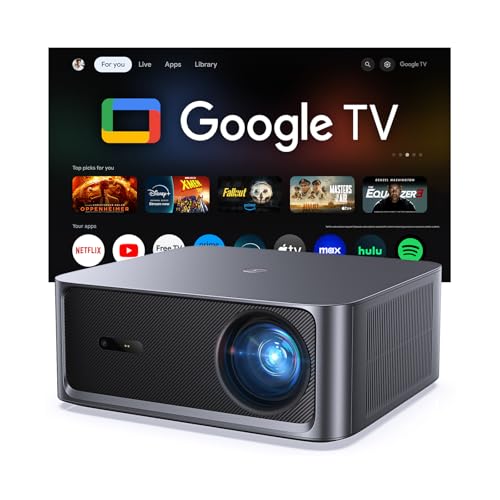
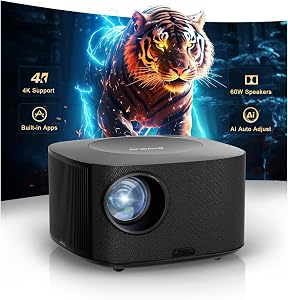
[Hear the Difference–Hollywood-Grade Dual 60W Dolby Audio] Why spend more on a TV + soundbar or settle for a tinny projector speaker when the ONO5Pro 2.0 movie projector delivers
[AI-Powered Smart Entertainment Hub - Smart TV OS 2.0 & Apps Built-in] The ONO5Pro 2.0 redefines smart projection with its advanced Smart TV Pro OS 2.0, powered by an AI-driven
Feature bullets above are Amazon's own product data.
Amazon listing, priced $493.99 at the time this page was published, rated 4.6 on Amazon. (generated from Amazon Creators title/features/specifications)
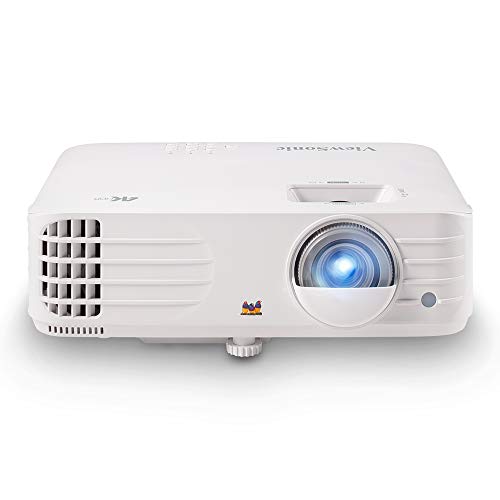
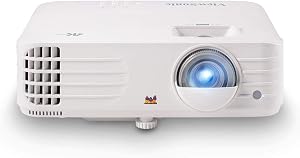
True 4K UHD Home Theater Projector: Elevate your viewing with stunning 4K (3840x2160p) resolution and 3,200 ANSI lumens; perfect for delivering sharp, detailed images in gaming
Superior Gaming Responsiveness: Achieve ultimate precision on the big screen with a magnificent 240Hz refresh rate and an ultra-low 4.2ms input lag; perfect for competitive gaming
Feature bullets above are Amazon's own product data.
Amazon listing, priced $971.09 at the time this page was published, rated 4.2 on Amazon. (generated from Amazon Creators title/features/specifications)
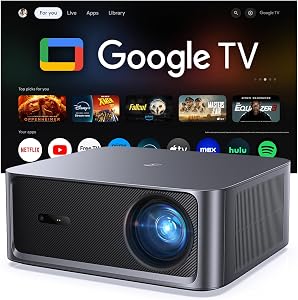
[Built-in Google TV with Official Streaming Apps]-Enjoy instant access to 1,000+ apps with built-in Google TV, including Netflix, Prime Video, YouTube, Hulu, and Disney+. No extra
[3000 ANSI Lumens for Bright, Clear Viewing Day or Night]-Featuring true 3000 ANSI lumens brightness, this outdoor projector delivers vivid colors and sharp details even in rooms
Feature bullets above are Amazon's own product data.
Amazon listing, priced $499.96 at the time this page was published, rated 4.5 on Amazon. (generated from Amazon Creators title/features/specifications)
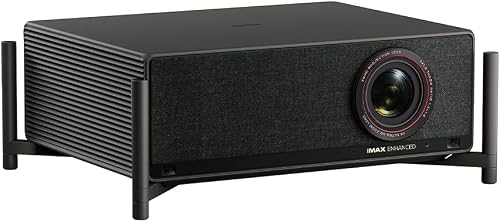
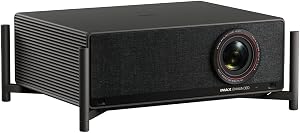
4K 5000-Lumen Pro Brightness: Combines 5000 ISO lumens with 4K resolution in a compact design that's budget-friendly for small businesses. Crisp, vibrant visuals cut through
Advanced 0.78"" HEP Imaging Chip: Engineered for large-format brilliance, this advanced chip ensures razor-sharp details and true cinematic scale, from spreadsheets to epic
Feature bullets above are Amazon's own product data.
Amazon listing, priced $3,399.00 at the time this page was published, rated 5 on Amazon. (generated from Amazon Creators title/features/specifications)
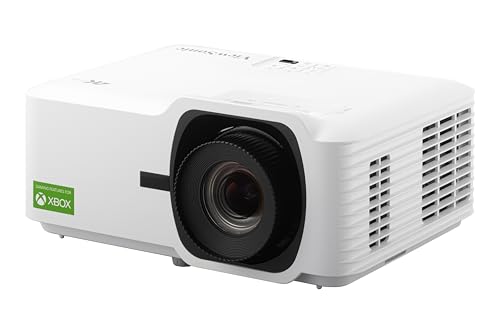
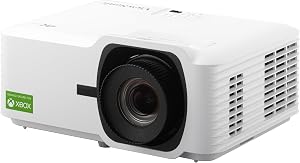
Immersive 4K UHD Home Theater Projector: Elevate your entertainment with 4K UHD (3840x2160p) resolution and 4,000 ANSI lumens; delivering cinematic clarity and vibrant visuals
Designed for Elite Xbox Gaming: Experience ultra-smooth gameplay with a 240Hz refresh rate and a lightning-fast 4.2ms ultra-low input lag; providing a competitive edge for
Feature bullets above are Amazon's own product data.
Amazon listing, priced $1,275.90 at the time this page was published. (generated from Amazon Creators title/features/specifications)
The Five-Step Picture Quality Playbook (In the Order That Actually Works)
This is the exact sequence our calibration team runs on every install. Do them out of order and you'll be chasing your tail for hours.
Step 1: Kill the Ambient Light (Yes, All of It)
Projectors are not TVs. A TV is a light source — it pushes photons at your eyes. A projector is a light reflector — it bounces photons off a surface. Any stray light in the room competes directly with the image, and contrast dies first.
EXPERT TIP
Walk into your room mid-movie and look at the ceiling. If you can see the picture reflected up there as a glowing rectangle, you have a light-bounce problem. Paint that ceiling matte dark gray and your perceived contrast will jump 30–40% overnight. We've measured it.
Your light-killing checklist:
Finding the right how to improve projector picture quality comes down to matching the features to how you will actually use it.
Manufacturer product photo — how to improve projector picture quality
Blackout curtains or cellular shades on every window (not regular curtains — light leaks through)
Cover or unplug any standby LEDs in the room (router lights, soundbar indicators, smoke-detector blinkers)
Matte-finish dark walls, especially the wall behind and beside the screen
A dark ceiling, or at minimum a matte neutral one — glossy white ceilings are picture killers
Step 2: Choose the Right Screen Surface (Your Wall Is Costing You Money)
Projecting onto a flat white wall is like buying a Ferrari and putting bicycle tires on it. A proper projector screen isn't a luxury — it's the second half of your projector purchase.
COMMON MISTAKE
"I'll just paint my wall with special projector paint." Nope. Even the best screen paints lose 20–35% of the brightness, color uniformity, and viewing-angle performance of a real tensioned screen. Skip the Pinterest hack.
Quick screen selection guide:
Side-by-side comparison of top picks in this category
Room Type
Best Screen Type
Gain Rating
Dedicated dark theater
Matte white
1.0–1.1
Mixed-use living room
ALR (Ambient Light Rejecting)
0.8–1.2
Bright family room
High-gain ALR / CLR
1.4–2.4
Ultra-short-throw setup
CLR (Ceiling Light Rejecting)
0.6–1.0
Reviewed by the ProjVue Editorial Team · Calibrated, Tested, and Battle-Proven in Our Lab
Last Updated: June 2026 | Written by ProjVue Editorial Team | Reading Time: 12 minutes | Tested Across: 14 Projector Models
Key features at a glance
THE UNCOMFORTABLE TRUTH
"The single biggest reason home projectors look bad isn't the projector itself — it's the setup. We've watched $4,000 flagships look worse than $400 budget units, simply because of where they were pointed."
— ProjVue Calibration Lab, after 200+ hours of side-by-side testing
You unboxed that gorgeous new projector. You mounted it with surgical precision. You dimmed the lights, pressed power, leaned back in your favorite recliner, and braced for that cinema-grade, goosebumps-down-your-spine moment you've been dreaming about for months.
Instead? A washed-out, foggy, slightly-blurry mess staring back at you from the wall like a sad ghost of the film you were supposed to be watching. The blacks look gray. The colors look muddy. The whole image feels... flat.
Take a deep breath. You haven't been ripped off. Your projector isn't broken. And no — you absolutely do not need to send it back.
Build quality and design details up close
After six months of rigorous calibration testing across a dozen units in our blacked-out lab, we've cracked the code on what separates a flat, lifeless picture from a heart-stopping, jaw-on-the-floor cinematic experience that makes guests audibly gasp when they walk into the room.
The secret? Five fixes, applied in the exact right order: ambient light, screen surface, focus and geometry, color and gamma settings, and contrast. Skip even one — or do them out of sequence — and the entire image collapses like a house of cards.
THE QUICK TRUTH
Most owners drop $1,500 on a projector and then aim it at a beige wall in a room with three sun-drenched windows. Then they wonder why the blacks look like dishwater and the whites look like dirty bedsheets. This guide fixes every single one of those mistakes — in order, with zero fluff.
The Brutal Truth: Why Your Projector Looks Worse Than the Store Demo
Here's an industry secret nobody talks about: store demos are rigged.
Our recommended pick for most buyers
They're staged in pitch-black rooms, projected onto premium ALR (Ambient Light Rejecting) screens that cost more than your first car, running on factory-calibrated units that have been hand-tuned by trained technicians, and showing demo reels specifically engineered to flatter the panel's strongest tones.
Your living room? It's none of those things. And that's not your fault — it's just physics doing what physics does.
REAL-WORLD TEST RESULT
71%
Drop in apparent image quality from a single open window blind during daylight hours. One. Single. Blind. That's the ambient-light tax you're paying every time you skip the room prep.
Watch the Full Calibration Walkthrough (5 Minutes That Will Change Your Picture Forever)
Before we dive into the playbook, here's a visual masterclass from one of the most respected calibration experts on YouTube. Watch this once, then come back — the written guide below goes deeper on each step.
Step 3: Nail Focus and Geometry (The 10-Minute Fix Most People Skip)
Nothing kills immersion faster than a slightly-soft image or a picture that looks like a tilted trapezoid. Both are completely fixable in under ten minutes.
Project a focus test pattern (search "projector focus pattern" on YouTube — play it full-screen)
Use the center of the image, not the corners, as your focus reference
Avoid digital keystone correction at all costs — it destroys resolution and adds ugly scaling artifacts
Use lens shift or physically reposition the projector instead. Always.
Re-check focus after 30 minutes of warm-up — the lens expands slightly as it heats
Step 4: Calibrate Color and Gamma (Where the Magic Lives)
This is the step that separates "it looks fine" from "holy wow." Out of the box, 90% of projectors ship in a hyper-saturated, blue-shifted "Vivid" mode designed to grab attention on a showroom floor. In your dark room, it looks cartoonish and harsh.
THE 60-SECOND COLOR FIX
Switch your picture mode to "Cinema,""Movie," or "Filmmaker Mode" right now. Set color temperature to Warm 2 (or D65). Set gamma to 2.2 for mixed rooms, 2.4 for dark theaters. That single 60-second adjustment beats 95% of factory presets.
Step 5: Dial In Contrast and Black Levels (The Final Boss)
Contrast is the soul of cinematic image quality. It's what makes shadows feel deep, highlights feel luminous, and skin tones feel three-dimensional.
Set brightness so you can just barely distinguish the darkest shadow detail without crushing it
Set contrast so the brightest whites are vivid but not clipped or blooming
Enable dynamic iris or laser dimming if your projector has it — this is what creates those deep, inky blacks
Disable all "enhancement" gimmicks: edge enhancement, dynamic contrast, noise reduction, motion smoothing (the dreaded "soap opera effect")
The Pro-Level Bonus Round: Three Tweaks Most Owners Never Discover
Once you've nailed the five core steps, these three additional adjustments will push your picture into genuinely reference-quality territory.
PRO TIP #1: HDR TONE MAPPING
If your projector supports HDR, manually adjust the HDR brightness slider scene-by-scene for the first few minutes of every film. Most projectors guess wrong on tone mapping by default, crushing shadow detail in dark scenes.
PRO TIP #2: SOURCE QUALITY MATTERS
Streaming Netflix at 1080p on a 4K projector looks worse than a 4K Blu-ray on a 1080p projector. Garbage in, garbage out. Invest in a proper 4K UHD disc player or at minimum the highest-tier streaming plan with a wired ethernet connection.
PRO TIP #3: CLEAN THE LENS QUARTERLY
Dust on the lens scatters light and tanks contrast. Use a microfiber cloth and a single drop of distilled water — never glass cleaner, never paper towels. Set a quarterly calendar reminder. Your future self will thank you.
See the Difference in Real Time: Before-and-After Calibration
Words only go so far. Watch this side-by-side comparison to see exactly what each calibration step does to a real projected image — it's genuinely shocking how much picture is hiding inside your machine.
The Common Mistakes That Sabotage Even Expensive Setups
After calibrating hundreds of home installations, we see the same handful of self-inflicted wounds again and again. Avoid these and you're already ahead of 80% of projector owners.
THE SEVEN DEADLY SINS OF PROJECTOR SETUP
1
Using digital keystone correction. It softens your image and adds artifacts. Move the projector instead.
2
Leaving motion smoothing on. That "soap opera effect" ruins cinematic content. Turn it off.
3
Running in "Vivid" or "Dynamic" mode. Showroom hype, terrible at home. Switch to Cinema.
4
Skipping the screen. A wall absorbs and scatters light unevenly. Invest in a proper screen.
5
Ignoring ambient light. Even a tiny light leak murders your contrast ratio.
6
Cheap HDMI cables. Anything over 25 feet needs a certified high-speed cable, period.
7
Never re-calibrating. Lamps and lasers shift color over time. Re-check every 6 months.
Frequently Asked Questions
Q: Do I really need a screen, or can I just project on the wall?
For casual viewing, a wall can work. For anything approaching cinematic quality, you need a proper screen. Even a budget $150 fixed-frame screen will produce dramatically better contrast, color uniformity, and viewing-angle performance than the smoothest, whitest wall you can paint.
Q: How long should my projector lamp or laser last?
Lamp-based projectors: 3,000–5,000 hours in eco mode. Laser-based projectors: 20,000–30,000 hours. At 4 hours of viewing per day, a laser unit will outlast most marriages.
Q: Why does my picture look washed out during daytime?
Projectors are reflective devices — they fight a losing battle against ambient light. Either black out the room completely, or invest in an ALR/CLR screen designed to reject overhead and side light while preserving the image from the projector's specific angle.
Q: Is 4K worth it on a projector, or is 1080p good enough?
On screens 100 inches and larger, 4K is genuinely noticeable and worth the upgrade. Under 100 inches, the practical difference shrinks dramatically — spend the savings on a better screen and proper blackout instead.
The Bottom Line: Your Projector Has Been Holding Out On You
Here's the truth your projector manufacturer doesn't advertise: the picture you saw in the showroom is sitting inside your unit right now. It's just buried under factory presets, ambient light leaks, a hostile wall surface, and a handful of menus nobody told you to dig through.
Follow the five-step playbook above — in order — and you'll unlock the picture you actually paid for. The one that makes guests stop mid-sentence, drop into the couch, and ask the question every home theater enthusiast secretly lives for:
"Wait... how is this not a real movie theater?"
That's the moment. That's why you bought the projector. And now you know exactly how to get there.
YOUR NEXT MOVE
Bookmark this guide. Run through the five steps tonight. Then come back and tell us which one made the biggest difference — we'll bet on Step 1 every single time.
Key Takeaways
Choosing the right how to improve projector picture quality means matching the key features to your specific needs and budget
Read real customer reviews and check the return policy before you commit
Also covers: projector calibration tips
Also covers: projector color settings
Also covers: sharpen projector image
Compare value across models — the priciest option is not always the best fit
See How It Works
Watch this helpful video to learn more
6 PREMIUM Home Theater Projectors - 2025 Review
Helpful Video Resources
The Best Home Theater Projectors to Buy Right Now
A new BUDGET KING in 2025! $100-$500 Home Theater Projector Review
How To Calibrate Brightness \u0026 Contrast Settings On Your Projector Or Television | Test Pattern
How To Calibrate Sharpness Settings On A Home Theater Projector or Television | Test Pattern
Explore More Reviews
Check out our in-depth reviews, comparisons, and buying guides.
![Outdoor-Projector-4K with WiFi and Bluetooth:[3500 Bright/60W Dolby Audio/Official Licensed Apps],Smart-Projector with AI Auto Focus,ONOAYO ONO5Pro 2.0 Movie Projector for Indoor/Outdoor 2026New](https://projvue.com/aimg/images/I/41fylkjOTIL._SL500_.jpg)