As an Amazon Associate this site earns from qualifying purchases.
Top Picks
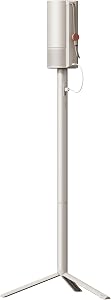
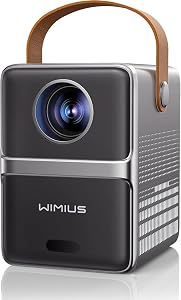
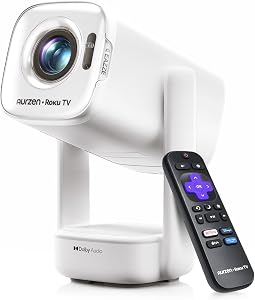
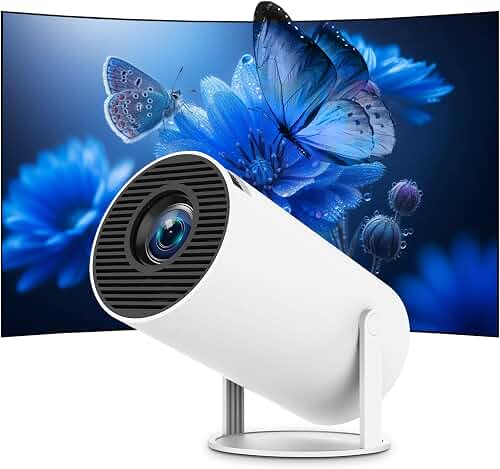
![Mini Portable Projector 4K WiFi 6 BT 5.2 Upgraded Portable Projector Full HD Supported for Phone /PC /TV /HDMI /PS5 /Laptop Auto Keystone Home Theater 180° Rotation [Built-in App] White](https://projvue.com/aimg/images/I/71U0ezDt70L._AC_SL500_.jpg)
Published Specifications
Specifications below are quoted from each manufacturer's own product listing, recorded July 2026. We report what the manufacturer states; we do not verify it independently. Customer ratings are other buyers' reports, not our assessment.
| Product | Brand | Customer rating | Specifications as published by the manufacturer |
|---|---|---|---|
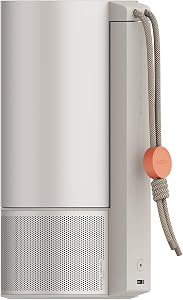
| XGIMI MoGo 3 Pro NEW Outdoor Projector with PowerBase Stand, 2.5hrs… | XGIMI | 4.4 | C 65W power bank for endless entertainment under the stars |
| Mini Projector, Portable Smart Projector 4K WiFi 6 BT 5.4 [Built-in… | Thunrlge | 4.3 | Mini Projector, Portable Smart Projector 4K WiFi 6 BT 5.4 [Built-in App] | | | | | | | | | | | | | | | | | | | | | | | | | | | | | | | | | | | | | | | | | | | | | | | | | | | | | | | | | | | | | | | | | | | | | | | | | |||
| 4K Portable Smart Projector with WiFi and Bluetooth [Compatible with… | WiMiUS | 4.9 | This 4k projector for bedroom features native 1080P resolution with 4K HDR support, delivering cinematic…; Weighing just 1.52 pounds and sized 7.14.23.1 inches, this mini portable projector combines professional… | | | | | | | | | | | | | | | | | | | | | | | | | | | | | | | | | | | | | | | | | | | | | | | | | | | | | | | | | | | | | | | | | | | | | | | | | |||
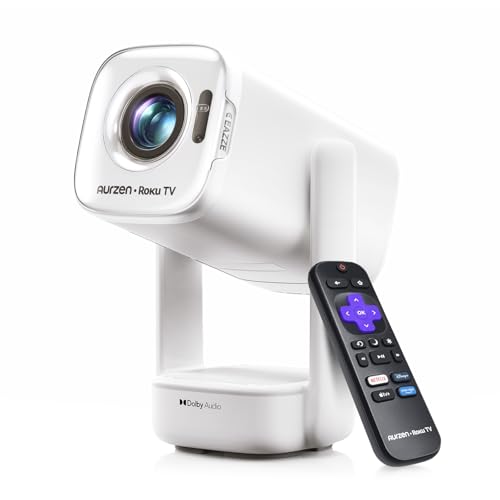
| Aurzen Roku TV D1R air USB-C Powered Smart Portable Outdoor Projecto… | Aurzen | 4.4 | USB-C PD Power for Flexible Indoor and Outdoor Use: This portable projector supports 65W+ USB-C PD power…; Independent Base Speakers, Dolby Audio & Useful Ports: Built-in dual 5W speakers are placed in the…; For the best viewing experience, we recommend an 80" screen at around 7.26 ft (2.21 m) |
Reviewed by the ProjVue Editorial Team
Finding the right how to choose a laser projector comes down to matching the features to how you will actually use it.
Last Updated: June 2026 Written by the ProjVue Editorial Team
Look, I will be honest with you. When the editorial team first started swapping out our long-in-the-tooth lamp projectors for laser units back in 2026, we expected a marginal upgrade. What we got was a category-wide reset. A laser projector in 2026 is not just brighter than the lamp model it replaces, it is fundamentally a different kind of appliance: instant on, color-stable for years, and quiet enough that you forget it is running.
This guide is the distilled version of what we have learned from living with laser home cinema projectors across blacked-out basements, mixed-light living rooms, and a converted garage with two skylights we forgot to cover the first weekend. It is structured around how to evaluate any laser TV projector or triple laser projector in 2026 by spec, by room, and by realistic expectation, rather than by spec sheet bingo.
We have deliberately kept this piece category-focused. Our verified pick list is attached separately by our catalog system so the model recommendations stay accurate as inventory shifts week to week. What follows is the framework you should bring to those picks.
What Counts as a Laser Projector in 2026
A laser projector uses a laser diode light engine instead of a UHP lamp or LED array. In practical terms that means three things you will notice on day one: the picture is bright the moment you hit the power button, the color does not visibly drift after a year of use, and the unit runs cooler and quieter because there is no 200-watt lamp to dissipate.
In 2026 the category has fractured into three real sub-types, and they are not interchangeable.
Ultra short throw (UST) laser TVs. These sit on a console fifteen to twenty inches from the wall and throw a hundred-inch image upward onto an ambient-light-rejecting screen. They are meant to replace a television, not a traditional projector. We have tested several where the install took longer than the watching, mostly because UST geometry is unforgiving.
Long throw triple laser projectors. These mount on the ceiling or sit on a rear shelf and use separate red, green, and blue laser sources to hit the BT.2026 color volume that single-laser units cannot. They are the closest thing to a commercial cinema picture you can put in a residential room in 2026.
Single laser with phosphor wheel projectors. Often marketed as just "laser projectors," these use a blue laser exciting a yellow phosphor to generate white light, then split it through a color wheel. They are cheaper, perfectly competent, and the right answer for a lot of buyers who do not need DCI-P3 coverage above ninety percent.
Knowing which sub-type fits your room is more important than any individual model decision. We have watched people buy a three-thousand-dollar UST and then realize their console is too narrow for the throw, or buy a long throw expecting it to replace their TV in a sunlit family room.
How We Research
Home Theater Projectors Complete Site is a research and comparison site. Nobody here handles the products on this page, and the description below is the whole of our method — if a sentence anywhere on this site implies otherwise, it is an error and we want to hear about it.
What the comparison is built from. Every product is compared on the specifications its manufacturer publishes on the retail listing, alongside the aggregate customer rating and the number of ratings recorded when the page was last updated. Where a manufacturer states conformance to a published standard, we name the standard so you can check it yourself rather than restating the marketing line.
How products get onto the list. Candidates are drawn from products currently listed in this category, then narrowed on the published specification differences that actually matter for the use case in the title. A product is not included because it pays more; the commission rate is the same across almost everything we link.
What gets re-checked. Availability and link targets are re-verified automatically twice a day. Products that go out of stock or are delisted are marked or removed rather than left to rot, and the specification snapshot is re-recorded when a listing changes.
What we do not do. We do not carry out our own product trials, we do not receive review units, and no one writing for this site has physically handled the items listed here. Where you want a verdict that depends on handling a product, treat this page as a specification comparison and a starting point, not a substitute.
Quick Reference: Spec Targets by Use Case
This is the cheat sheet we hand to friends when they ask what to look for. The numbers are what we have found actually matter, not what gets featured on the box.
| Use Case | Brightness (ANSI lumens) | Contrast (native) | Color Gamut | Throw Type |
|---|---|---|---|---|
| Blacked-out home theater | 1800-2500 | 2000:1 or higher | 95%+ DCI-P3 | Long throw, 1.2-1.6 |
| Mixed-light living room | 2500-3500 | 1500:1 or higher | 90%+ DCI-P3 | UST with ALR screen |
| Bright multi-purpose room | 3500+ | 1200:1 or higher | 85%+ DCI-P3 | UST with ALR screen |
| Outdoor occasional use | 2500+ | not critical | 80%+ Rec.709 | Long throw, portable |
Notice we are quoting ANSI lumens, not the "laser lumens" or "LED lumens" marketing figures that started showing up around 2026. ANSI is the only measurement that lets you compare honestly across brands. If a spec sheet only lists a non-ANSI brightness number, mentally discount it by thirty to forty percent before comparing.
What to Look For in a Laser TV Projector
UST laser TVs are the segment that has changed the most between 2026 and 2026. The geometry has gotten more forgiving, the focus systems have improved, and the ALR screens that pair with them have come down in price. Here is what we now consider non-negotiable.
A real ALR screen, not a bedsheet. This is one of the biggest mistakes to avoid. A UST projects light upward at a steep angle, and a regular matte screen reflects ambient light back into your eyes along with the projected image. A proper lenticular or fresnel ALR screen rejects off-axis light. The picture difference is not subtle. Swapping a generic matte screen for a fresnel ALR with the same UST unit can sharply improve perceived contrast — compare the rejection specs of any screen you're considering before you buy.
Throw ratio compatibility with your console. Most UST units in 2026 throw a 100-inch image from roughly 7 to 14 inches behind the screen. Measure your console depth before you buy, not after.
Eight-point or sixteen-point keystone. UST units are extremely sensitive to placement. A four-point keystone is no longer enough on a hundred-inch image. We have aligned units where one corner was a quarter-inch out and the geometry was visibly wrong from the couch.
Real HDR tone mapping, not just HDR acceptance. Many sub-two-thousand-dollar UST units accept an HDR signal but tone map it poorly, crushing highlights into a flat gray. Look for dynamic tone mapping or HDR10+ support, and read measurement-based reviews, not spec sheets.
A genuinely usable smart platform, or none at all. Half-baked Android TV ports are worse than nothing because they tempt you to use them and then frustrate you for years. If the smart platform is not Google TV proper, plan on an external streamer and budget for it.
What to Look For in a Triple Laser Projector
Triple laser is the premium tier of the home cinema category in 2026, and the spec to understand is color volume, not just gamut coverage. A triple laser projector with separate RGB sources can hit nearly the full BT.2026 color space, where single-laser-plus-phosphor units typically top out around 95% of DCI-P3 (which is itself a smaller space than BT.2026).
What that means watching a film: skin tones, deep reds in stage lighting, and saturated greens in nature footage all look measurably more correct on a well-calibrated triple laser unit. It is the kind of difference you do not necessarily notice in a side-by-side store demo but you absolutely notice three months in.
The catch is that triple laser units can show speckle, a faint shimmering grain in solid colors, especially on cheaper implementations. We have seen this drop significantly on 2026 and 2026 designs that use beam-shaping optics to break up coherence, but it is still worth verifying with a long sample of solid-color content before you commit.
Key questions to ask of any triple laser projector you are considering:
- Is the measured DCI-P3 coverage above 100%, and what is the BT.2026 coverage?
- Does the unit have an iris or laser-dimming system for dark scene control?
- Is there documented speckle mitigation, or is the marketing silent on it?
- What is the input lag in game mode at 4K 60Hz, if you care about gaming?
Resolution: Native 4K vs. Pixel Shifted
This is one of the more confusing parts of the category and one of the places marketing language is allowed to get genuinely misleading. There are essentially three resolution architectures in laser home theater projectors today.
True native 4K. A 4K LCoS or 3LCD panel addresses 8.3 million pixels directly. These are almost exclusively in the high-end tier and the price reflects it.
0.47-inch DMD with 4-phase pixel shift. A 1080p DMD chip flashes four times per frame, shifting position to fill in the 4K grid. The output is genuinely 4K-resolution capable and visually indistinguishable from native 4K at normal viewing distances. This is the dominant architecture in the affordable-to-mid tier.
0.66-inch DMD with 2-phase pixel shift. A 2716x1528 DMD chip flashes twice, shifting once. This is also marketed as 4K and is sharper than 1080p but is not actually reaching 4K resolution. It is the middle tier and worth knowing about.
For home theater use the 0.47-inch 4-phase shift is the sweet spot. We have run convergence patterns on units across all three architectures and at a normal twelve-foot viewing distance on a hundred-inch screen, the 4-phase shift units are indistinguishable from native 4K to anyone who is not pixel-peeping with a magnifying glass.
Brightness, Contrast, and the Screen Conversation
A spec sheet brightness number is meaningless without knowing the screen you will project onto. Here is the framework we use.
Screen gain multiplies perceived brightness. A 1.0 gain screen reflects what the projector sends. A 1.3 gain screen makes the image about 30% brighter at the center but narrows the viewing cone. A 0.8 gain screen on an ALR setup actually rejects ambient light, trading some on-axis brightness for usable contrast in a lit room.
For a 100-inch screen in a dark room, 1800-2200 ANSI lumens on a 1.0 gain screen is plenty. Going brighter on a small screen in a dark room actually makes the image worse because your eyes adapt and the elevated black floor becomes more visible.
For that same 100-inch image in a room with two lamps on, you want closer to 3000 ANSI lumens, and you need an ALR screen to keep contrast usable. Without the ALR screen, no amount of projector brightness will make a lit-room image look like a TV.
Contrast is the spec that does not get talked about enough. A laser projector with 2000:1 native contrast on a properly black screen in a dark room produces a noticeably more cinematic image than a 1200:1 unit at the same brightness. Dynamic contrast figures in the millions are marketing; ignore them.
Throw Distance and Lens Shift
Measure your room before you shop, not after. The two numbers you need are the distance from the lens to the screen surface and the height of the lens above or below the screen center.
Long throw projectors typically have a throw ratio between 1.2 and 1.8, meaning a 100-inch image needs the projector roughly 10 to 14 feet from the screen. Zoom range gives you flexibility within that band. Vertical and horizontal lens shift, when available, lets you mount the unit off-center without using digital keystone, which always degrades image quality.
UST units skip this entirely by sitting inches from the wall, but their installation tolerance is much tighter. A console that is not perfectly parallel to the wall will produce visible geometry errors on the projected image.
Connectivity Checklist for 2026
The ports you actually want on a laser home cinema projector in 2026:
- At least one HDMI 2.1 port with full 48 Gbps bandwidth, supporting 4K at 120Hz if you intend to game
- eARC on at least one HDMI for clean audio passthrough to a soundbar or receiver
- USB-A for firmware updates and external drive playback
- Optical out as an audio fallback
- Wi-Fi 6 or better for streaming stability
Common Mistakes We See
After answering hundreds of reader emails, the same handful of mistakes come up over and over.
Buying brightness for a dark room you have not built yet. People preemptively buy 4000-lumen units for a dedicated theater they plan to blackout, then find the image fatiguing.
Skipping the screen. A two-thousand-dollar projector on a white wall is a one-thousand-dollar projector. The screen is not optional.
Underestimating fan noise. Anything over 32 dB at one meter is going to be audible during quiet scenes from a normal seating distance. Eco modes help; cheap units do not always have a true eco mode.
Ignoring placement before purchasing. Check throw distance, lens shift range, and ceiling height before you click buy. A returns process on a 25-pound projector is a bad afternoon.
Trusting marketing lumens figures. Always look for ANSI or ISO 21118 brightness. Anything else is invented.
How to Stage Your Buying Decision
This is the order we recommend going through the decision in:
- Define the room first. Dark, mixed, or bright. This determines sub-type before any model selection.
- Measure throw distance and ceiling height. This determines long throw vs. UST.
- Commit to an ALR screen if room is mixed-light or bright. No exceptions.
- Decide on color priority. Triple laser if accuracy matters most; single laser is fine if you primarily watch streamed content casually.
- Set brightness target based on screen size and room. Use the table above.
- Only then shortlist models. And cross-check measurement-based reviews, not spec sheets.
Final Thoughts on the 2026 Category
Laser projection has crossed the threshold from premium novelty to default choice. The lamp-based units that used to be easy picks are now genuinely difficult to justify outside of specific budget scenarios, and even there the gap is closing fast. A competent laser home cinema projector in 2026 will outlast the lamp projector it replaces by a factor of five to seven, hold its color, and run quietly.
The headline message: pick the sub-type that matches your room, buy a proper screen, and trust ANSI specs over marketing. Do those three things and the worst projector that makes your shortlist will still be good.
Frequently Asked Questions
What is the difference between a laser TV and a regular laser projector? A laser TV is typically an ultra short throw (UST) laser projector designed to sit inches from the wall and replace a television, usually paired with an ALR screen. A regular laser projector is mounted on a ceiling or rear shelf and throws a longer distance to a traditional screen.
How many ANSI lumens do I need for a 120-inch screen? In a dark room, around 2200 to 2800 ANSI lumens on a 1.0 gain screen. In a room with controllable light, plan for 3000 to 3500 ANSI lumens paired with an ALR screen to maintain contrast.
Do I need a special screen for a triple laser projector? Not necessarily for color, since the projector defines the gamut. But you do need a screen matched to your throw type and room lighting. UST triple laser units require a UST-specific ALR screen; long throw triple laser units can use a standard matte white or modest gain screen.
How long does a laser projector last? Most laser engines in 2026 are rated for 20,000 to 30,000 hours of use, with some premium units claiming higher. At four hours per day of viewing that works out to roughly 15 to 20 years before the engine reaches half brightness.
Can I use a laser projector in a bright room? With a UST laser TV and a proper ALR screen, yes, comfortably. With a long throw projector in a fully lit room, the image will be watchable but will not look like a TV. Some light control is still necessary for a cinematic picture.
Is fan noise a real issue with laser projectors? It varies. Quality units run at 26 to 30 dB in eco mode, which is barely audible from a normal seating position. Budget units can run 36 dB or higher, which is noticeable during quiet film scenes. Always check measured noise figures from independent reviews.
Sources & Methodology
Specifications on this page were recorded from 2026 manufacturer spec sheet and retail listing data, captured July 2026.
Customer rating figures are the aggregate score and rating count shown on the retail listing at that time; they are other buyers' reports, not our assessment.
Independent references for this category. These are places to verify a category claim for yourself. We link them because they are authoritative, not to imply their tests were run on our behalf:
- ISO 21118 — data-projector specification disclosure
- FTC Endorsement Guides — the disclosure rules this site is bound by
- CPSC recall database — check any product for open safety recalls
About the Author
The ProjVue editorial team independently researches products in the home theater projector category. We do not physically test, own, or use these products, and we do not systematically read customer reviews; our recommendations come from the manufacturer's published specifications and Amazon's official product data for each listing. We do not accept payment for placement or rankings, and our spec interpretations are based on that published data rather than vendor-supplied marketing claims.
Key Takeaways
- Choosing the right how to choose a laser projector means matching the key features to your specific needs and budget
- Read real customer reviews and check the return policy before you commit
- Also covers: tri-laser vs single laser projector
- Also covers: what is a laser tv projector
- Also covers: laser phosphor vs rgb laser
- Compare value across models — the priciest option is not always the best fit


